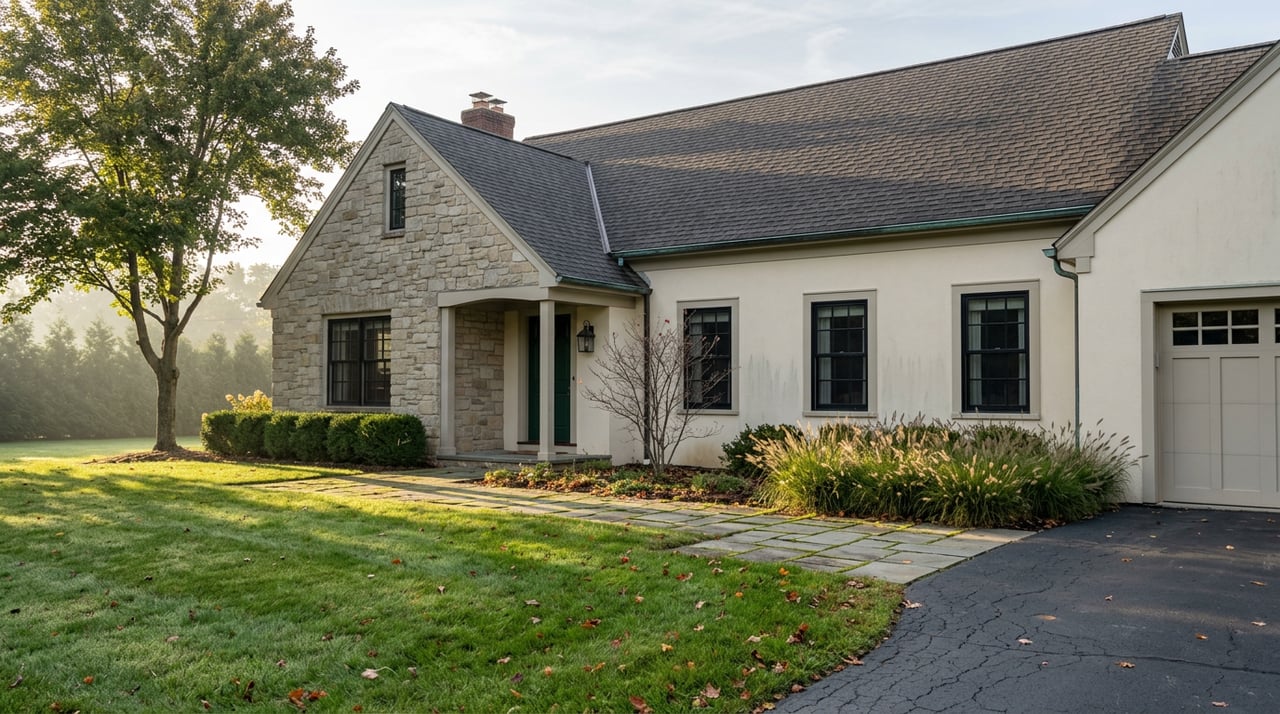
Most buyers looking around Palmyra assume the split is simple: inside the borough, you're on public sewer. Once you cross into the townships that surround it, you're on well and septic. It's a reasonable guess, and it's wrong in a way that matters at the closing table.
The actual line runs down the middle of North Londonderry Township, roughly along Route 422 and Main Street. South of that road, homes tie into public sewer. North of it, outside the North Hills development, properties sit on private wells and on-lot septic systems, full stop, regardless of how close they are to the borough line. Palmyra Borough itself doesn't even have its own treatment plant anymore. Its wastewater travels to North Londonderry Township's facility under an arrangement the two municipalities have run since 1976, with the borough covering roughly 43 percent of the plant's total flow. So the town line tells you almost nothing. The road does.
If you're comparing two listings that both say "Palmyra, PA" in the address, this is exactly the kind of detail a listing sheet won't surface and a portal search won't filter for. It shows up in the septic disclosure, the well water test, and the timeline your lender gives you to close.
Why the boundary sits where it does
North Londonderry Township lays this out plainly on its own site: properties with private well and on-lot sewage disposal make up most of the northern half of the township, and besides the North Hills development, that means everything north of Route 422 and Main Street. Everything south of that line runs through the township's public system, which the township describes as maintaining six pumping stations, more than 700 manholes, and over 36 miles of sewer pipe.
That system is also the one treating Palmyra Borough's sewage. The borough's own sewer ordinance defines its wastewater customers and billing structure, but it doesn't operate a treatment plant of its own. The physical plant sits on land that was formerly part of the Millard farm in South Annville Township, and it currently processes about 900,000 gallons of wastewater a day, with room to grow to 1.5 million gallons before it needs expansion.
For a buyer, this means the presence of a Palmyra mailing address is not proof of anything about your utilities. The property could be five minutes from downtown and still be on a well, if it happens to sit north of Main Street outside North Hills.
South Londonderry runs its own separate patchwork
If you widen the search to South Londonderry Township, the picture doesn't get simpler. That township's Municipal Authority owns the sanitary system serving the Campbelltown, Colebrook, and Lawn areas, using four wastewater treatment facilities and nine pumping stations. But the Timber Hills section is different again. Its collection system is owned directly by the township rather than the authority, and the sewer capacity itself is purchased from the Mt. Gretna Municipal Authority.
So within a single township, you can have two different answers to "who treats my sewage," depending on which neighborhood you're standing in.
| Area | Who serves it | Sewer source |
|---|---|---|
| Palmyra Borough | North Londonderry Township treatment plant | Public sewer, borough pays a usage-based share |
| North Londonderry, south of Route 422 (and North Hills) | North Londonderry Township | Public sewer |
| North Londonderry, north of Route 422 (excluding North Hills) | Individual property owner | Private well and on-lot septic |
| South Londonderry: Campbelltown, Colebrook, Lawn | South Londonderry Township Municipal Authority | Public sewer, four township-owned plants |
| South Londonderry: Timber Hills | South Londonderry Township | Public sewer, capacity purchased from Mt. Gretna Municipal Authority |
None of this is discoverable from a listing description. It comes from asking the right question, or from a septic inspection that either confirms a system exists or confirms it doesn't.
What a septic property actually requires before you close
If the parcel you're interested in sits on the well and septic side of that line, the paperwork changes. North Londonderry Township instituted its Sewage Management Program in 2010, in response to Pennsylvania DEP requirements under the state's Act 537 program. Under that program, property owners with on-lot sewage systems have to submit proof of pumping every three years, filed with the township along with an administrative fee.
This is the detail that catches buyers off guard: a septic system that hasn't been pumped and documented within that three-year window isn't just an inspection footnote. It's an open compliance item the seller may not have addressed, and it can turn into a repair or permit process that adds real time to a closing.
If a system needs to be installed, repaired, replaced, or modified, a permit is required, and the contact for that in North Londonderry Township is the Lebanon County Planning Department. That's a different office than the one handling your deed transfer or your property tax questions, and it's worth knowing before you're three weeks from settlement and discovering you need it.
On the ground, the people doing this work are local. Companies like Walters Septic Services and Totally Stoked Septic & Plumbing Services handle pumping, inspections, and permit-related work throughout the Palmyra area, and Tillett Inc., a family-owned business founded in 1990 and now operating as a certified women-owned company, has been doing similar work in the same footprint for over three decades. If your inspection turns up a septic system, one of these names, or a company like them, is who ends up on the invoice.
A short checklist before you write an offer
If you're comparing a handful of properties around Palmyra and don't yet know which side of the line each one falls on, ask these questions before you get too attached to a house:
- Is this specific parcel on public sewer, or on a private well and septic system?
- If it's septic, when was the tank last pumped, and is there a current inspection report on file with the township?
- If records are missing or expired, who is responsible for getting the property into compliance before closing, buyer or seller?
- Does your lender treat a septic property differently for underwriting or timeline purposes than a property already connected to public sewer?
- If a repair or new installation is needed, have you budgeted the extra weeks a Lebanon County Planning Department permit can add to your closing calendar?
None of these questions are answerable from a listing photo. They're answerable from a septic disclosure, a phone call to the township, or a conversation with an agent who already knows which road divides the two systems.
A few questions worth asking directly
How do I find out if a specific address is on public sewer or well and septic? Ask directly, either through the listing agent or by contacting the township office for the municipality the property sits in. For anything north of Route 422 and Main Street in North Londonderry Township, outside North Hills, assume septic until you confirm otherwise.
What happens if the septic pump-out records aren't current when a property goes under contract? The property is technically out of compliance with the township's Sewage Management Program.
Does being on the North Londonderry side of Route 422 change my closing timeline? It can. A septic inspection and any required permit work through the Lebanon County Planning Department both take time that a property already tied into public sewer simply doesn't need. Build in a buffer if you're touring homes on that side of the line.
If you're weighing a specific address around Palmyra and want to know which side of this line it falls on before you write an offer, that's exactly the kind of local detail worth a phone call. Ellen Stover can walk through it with you and help you schedule a free consultation and home valuation before you get further into the process.
This article is general information, not legal, tax or financial advice. Consult a qualified professional about your situation.